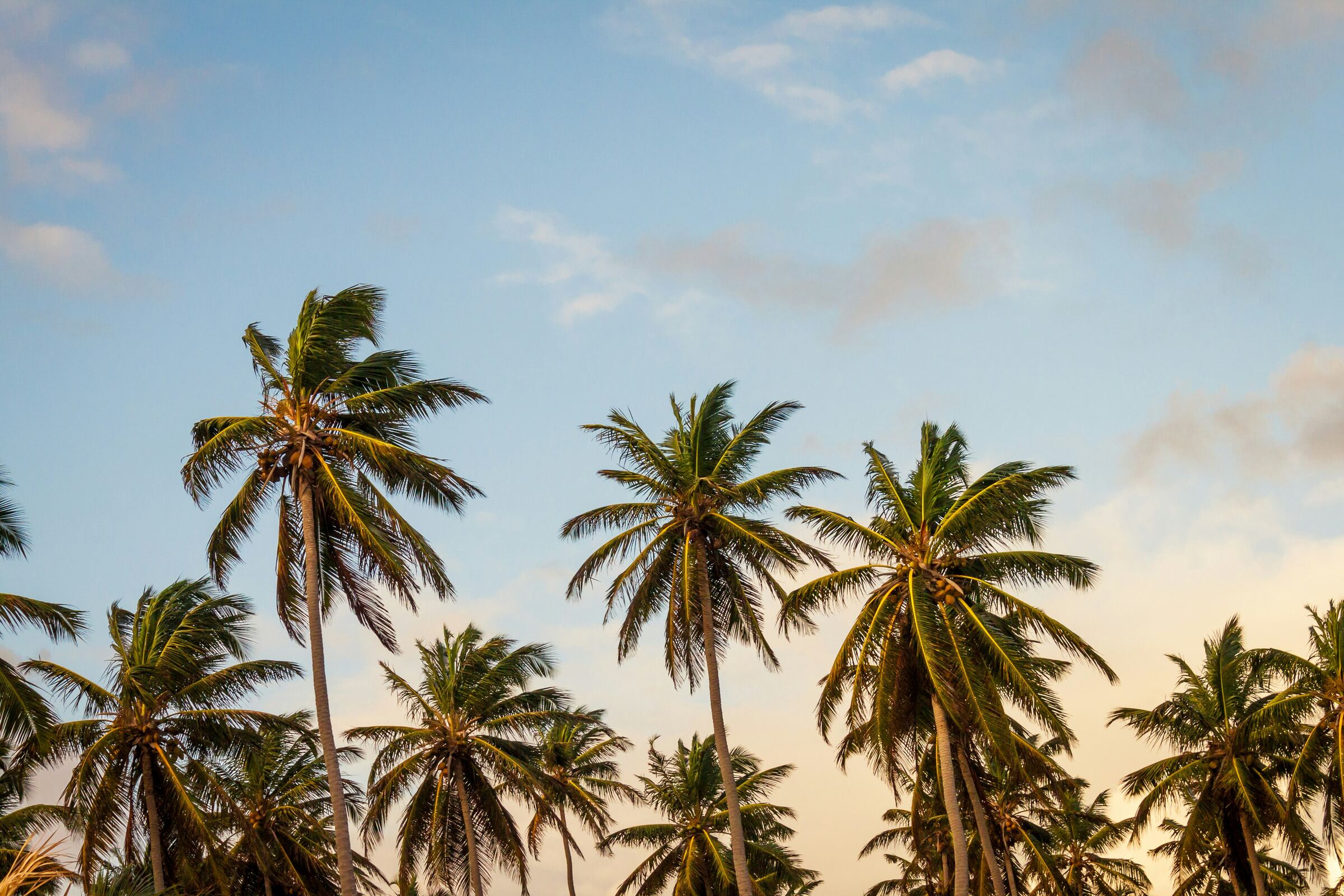
Zanzibar's year is set by two winds. The kaskazi blows from the north-east from December to March, warm and light; the kusi comes in from the south-east from June to September, steadier and cooler. The rains fall between them — the long masika from March to May, and the short vuli towards the end of the year. For centuries these were the winds that carried dhows between the Swahili coast, Arabia and India, out on one monsoon and home on the other, and the island still keeps its calendar by them. The east coast faces straight into the Indian Ocean, so each change of wind reaches the beach directly, with nothing in between.
The best time to visit Zanzibar
The best time to visit Zanzibar is September and October, when the days are dry and clear from sunrise to sunset, the evenings fresh, and the lagoon on the east coast at its calmest. They are also the best months of the year for a safari on the mainland or a climb of Kilimanjaro, so a trip that takes in the bush or the mountain and then the coast fits them better than any other time. December to February comes next, for the warmest and flattest sea, and even the long rains, from late March to May, tend to arrive as a storm at much the same hour each day, with the rest of the day often sunny and the island quiet.
I have lived and worked in Tanzania for more than thirty years, much of it in hospitality, on the coast and in the bush, and for most of that time I have planned around these seasons. What follows comes from watching the same pattern repeat, year after year, rather than from a climate chart.
Here is how that year plays out on the east coast at Pongwe — the weather, the sea, and which months suit which kind of stay.
Zanzibar weather: six degrees south
Zanzibar lies about six degrees south of the equator, and the temperature barely moves through the year — between 25 and 32°C in every month, with the sea warm enough to swim in from January to December. What changes is the wind, the humidity and the rain, and on the east coast, the behaviour of the water.
A wide coral reef runs along this coast a little offshore and takes the force of the ocean swell, so the lagoon behind it stays calm for most of the year. On spring tides the water draws back across the reef flat for hundreds of metres and comes back over the sand some six hours later, and swimming, walking the flats and going out with the fishermen are all timed to it.
Kaskazi, December to March: the hot, still season
The kaskazi is the warm season, when the north-east wind stays light for most of the day, the water inside the reef is flat and clear, and the weather is the hottest and stillest of the year. Humidity builds through January and February until the afternoons are heavy, so early morning and evening are the times to be out, and the breeze usually returns after dark.
It is also peak season, timed to the European winter and the Christmas holidays. On the east coast these are the months for swimming and snorkelling in the lagoon, for walking the reef flat at low tide out to the reef edge, and for fishing trips beyond it while the outer sea is calm. The sun comes up straight out of the ocean in front of the beach, and in these months the sky at dawn is usually clear.
Masika, March to May: Zanzibar's rainy season
As the kaskazi eases the long rains come in: masika runs from late March into May and is the wettest stretch of the year, with April the heaviest month, though the rain rarely settles in for days at a time. More often it comes as a storm at much the same hour each day, usually in the afternoon or overnight, heavy while it lasts and then gone, and the mornings and the hours after it are often sunny, warm and still. Within a few weeks the island turns green again, from the coral rag inland to the palms behind the beach, and with fewer visitors on the island the beaches are close to empty.
Once you know the pattern, masika is easy to plan around: the beach and the lagoon in the morning, the storm over a long lunch or an afternoon indoors, and a walk along the shore in the cooler, rinsed air once it has passed. Boat trips and the walk out to the reef are best timed to the clear hours, and the regularity of the storms makes those hours easy to predict.
Kusi, June to September: cool, dry and breezy
In June the wind swings round to the south-east and settles there for the season. The kusi brings the cool, dry months: clearer air, lower humidity, days in the mid-twenties and a steady breeze across the beach from morning to evening. Outside the reef the swell is bigger and the sea rougher, which is what brings kitesurfers to the east coast at this time of year; inside the reef the lagoon is still swimmable on most tides.
This is the second high season, timed to the northern summer, and for anyone who finds the kaskazi heat hard going, the more comfortable of the two. The wind keeps the temperature down through the middle of the day, the evenings are cool enough for a long sleeve, and the night sky is at its clearest. Buildings on this coast are opened to the kusi wherever they can be, because a room with a steady south-easterly running through it needs little else to stay cool.
September and October: the best months to visit Zanzibar
September and October are the best of the year on the east coast, and the months I would choose over any other. Through September the kusi eases to a light breeze, the air stays dry, and the days are clear from sunrise to sunset. By October the wind has dropped further, the lagoon is at its flattest and the water at its clearest for snorkelling. The evenings are fresh enough to sit out late, without the heavy heat of the kaskazi or the full strength of the kusi.
On the mainland these are the last months of the long dry season. The game gathers around the remaining water, which makes it the strongest time of year for a safari, and the routes up Kilimanjaro are dry. A week in the bush or on the mountain, then a week on the coast, works better in September and October than at any other time of year.
November: the short rains
The short rains, the vuli, arrive in November — lighter than masika, mostly brief showers with clear spells between them. By December the north-east wind has returned and the kaskazi season opens.
Zanzibar weather by month
| Month | Season | Weather | On the water |
|---|---|---|---|
| January | Kaskazi | Hot, humid, mostly dry | Flat lagoon; good snorkelling and reef walks |
| February | Kaskazi | Hottest and most humid | Flat and clear |
| March | Kaskazi, rains arriving late in the month | Hot; showers building | Calm early, unsettled late |
| April | Masika | Wettest month; storms most days, often at the same hour, with sun between | Mornings usually clear; the quietest beaches of the year |
| May | Masika | Storms easing through the month, with sunny spells between | Quiet; settling by late May |
| June | Kusi | Cooler and drier; breeze settling in | Swell building outside the reef |
| July | Kusi | Coolest and driest; steady breeze | Kite season; lagoon swimmable on most tides |
| August | Kusi | Cool, dry and breezy | As July |
| September | Kusi, easing | Best month: dry, clear days and fresh evenings | Good conditions inside and outside the reef |
| October | Between the monsoons | Best month: dry, clear and calm, with fresh evenings | Flattest, clearest water of the year |
| November | Vuli | Warm, with brief showers | Calm between showers |
| December | Kaskazi | Hot, humid, mostly dry | Flat; peak season from mid-month |
When to visit, by what you want
For the best of the year, come in September or October, when the days are dry and clear, the evenings fresh and the water calm, and when a safari or a Kilimanjaro climb on the mainland is at its best too. For the warmest sea, come between December and March, January and February above all, when the lagoon is flat and the water at its warmest. For cooler weather and long days outside, June to October is the window, with the kusi taking the heat out of the middle of the day, and from June to September the same wind blows steadily enough, morning to evening, to bring the kitesurfers.
Families tied to school holidays have two good fits, July and August in the kusi and Christmas and New Year in the kaskazi. For quiet, the edges of the rains — late May, early June and November — are when the island is between seasons and the beach is close to empty. Even April, the wettest month, rewards anyone happy to plan the day around an afternoon storm, with the island green, the beaches quiet and the mornings often bright.
A stay at Seasons through the year
Seasons Lodge closed in 2026 to be rebuilt, and the new Seasons — the lodge villas, the beach club, the spa and restaurant, and Seasons Residences alongside them — is designed with this calendar in mind. Each lodge villa is private, with butler service, and set into the walls, paths and gardens kept from the original lodge.
In the kaskazi the day starts early, with a swim on the flat lagoon at sunrise and breakfast while the tide is still out, and the hottest hours of the afternoon go to the beach club, where the infinity pool sits on the cliff above the ocean. In the kusi the terraces are in use from breakfast to dinner, because the south-easterly keeps them cool through the middle of the day, and the evenings are cool enough to stay outside long after dark. In masika the mornings go to the beach and the afternoon storm to the spa or a long lunch, and the beach is there again as soon as it has passed. In September and October the days are clear from first light, the evenings cool enough to eat outside, and a stay on the coast follows naturally from a week on safari or a climb of Kilimanjaro.
The residences face east to the sea, with layouts that let the breeze through before any air-conditioning is switched on and terraces shaded through the middle of the day. The detail is in a separate piece, Building for Salt, Sun and Monsoon.
For owners: choosing your weeks
For owners at Seasons Residences the calendar has a practical use, because each owner has 28 nights a year for their own stays, agreed in advance with the management team. Outside those nights the residence is let through the rental programme, which trades through both high seasons and the months between, so the choice an owner makes each year is which season to keep for themselves. For how foreign buyers hold property here, see Buying Property in Zanzibar as a Foreigner.
Frequently asked questions
What is the best month to visit Zanzibar?
September and October are the best months to visit Zanzibar, with dry, clear days, fresh evenings and calm water on the east coast, and they are also the best months of the year for a safari or a Kilimanjaro climb on the mainland.
When is the best time to combine Zanzibar with a safari or Kilimanjaro?
September and October are the time to combine them, because the long dry season on the mainland is ending, the game is concentrated around the remaining water and the mountain routes are dry, while the east coast is at its calmest; the usual order is the safari or the climb first, then a week on the coast to finish.
When is the rainy season in Zanzibar?
Zanzibar has two rainy seasons: the long rains, masika, from late March to May, with April the wettest month, and the short rains, vuli, in November, which are lighter and fall mostly as brief showers with clear spells between them. In both, the rain tends to come as a storm at much the same time each day rather than as days of steady rain, and the hours either side are often sunny.
Is Zanzibar good to visit in June, July and August?
June to August are the kusi months, when the south-east wind keeps the days in the mid-twenties and the air dry, and for anyone who finds the heat of the kaskazi hard going they are the more comfortable time to come, with clear nights, a steady breeze off the sea from morning to evening, and the main kitesurfing season on the east coast.
What is the hottest time of year in Zanzibar?
The hottest months are January to March, during the kaskazi, when the wind is light and the humidity at its highest, so the early mornings and the evenings are the best of the day.
Can you swim in Zanzibar all year round?
The sea is warm enough to swim in every month, and on the east coast the tide matters more than the season: the lagoon inside the reef is calm for most of the year, but at low spring tides the water draws back across the reef flat, so swims are timed to the tide.
Is it worth visiting Zanzibar in April?
April is worth it for anyone who wants the island quiet and green, because although it is the wettest month of the year, the rain usually comes as a storm at much the same hour each day, and the mornings and the hours after it are often sunny and pleasant, with the beaches close to empty.
A year at Pongwe
At Pongwe the two halves of the year are easy to tell apart. In January the day starts with a swim at first light, on a lagoon with barely a ripple across it. In August the kusi is still coming off the sea at bedtime, and the windows stay open to it until morning.